DRC needs to improve “ESG” of cobalt to become key to climate crisis
:format(auto):focal(center))
The Democratic Republic of the Congo positioned itself ahead of the COP27 meeting in Egypt as a “solution country” to the climate crisis, due to its rich carbon-absorbing forests, abundant freshwater resources, biodiversity and wealth of strategic metals.
The Congo Basin is one of the last regions in the world to absorb more carbon than it emits. Its forest, the second largest in the world, absorbs nearly 1.5 billion tonnes of CO2 from the atmosphere every year, equivalent to 4% of global emissions.
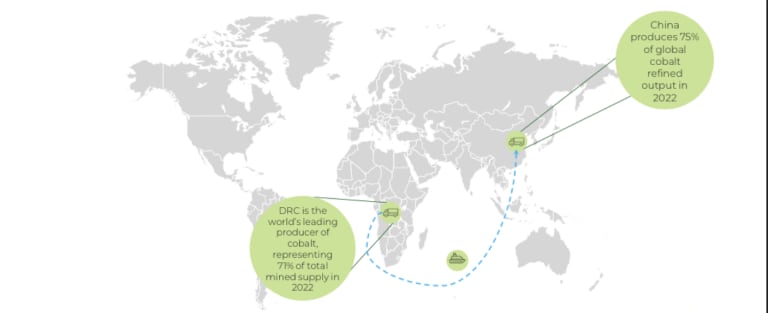
The country is also key to the energy transition due to rich resources of cobalt and copper, key battery minerals. This year the Congo is set to produce 71% of the world’s cobalt, according to Benchmark, 75% of which is refined in China. By the end of the decade, the DRC’s dominance is only set to fall to 63%.
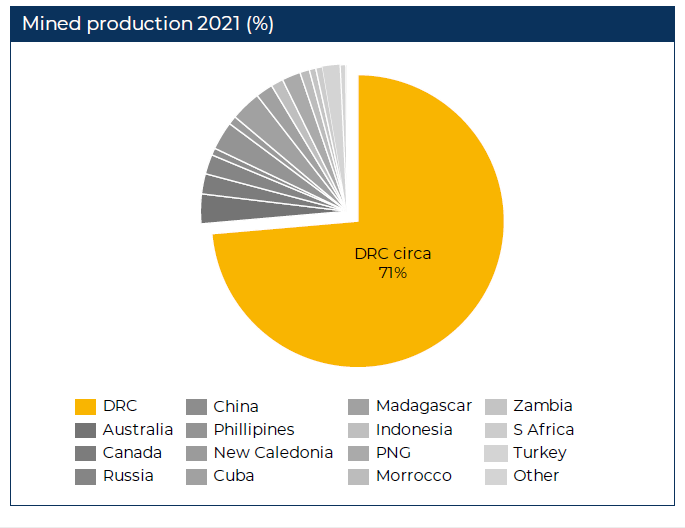
While recycled sources of supply are set to grow five times between 2022 and 2030, mined supplies of cobalt will remain the predominant source for decades.
To meet the global target of net zero emissions by midcentury, electric vehicle sales need to be 60% of global car sales by 2030, according to the International Energy Agency.
But the industry in the DRC needs to improve its disclosure of ESG issues to meet the needs of the energy transition – a key opportunity to work with the battery supply chain to ensure good practice going forward.
Cobalt mining activities negatively affect biodiversity and exacerbate the quality and availability of freshwater resources, two of the factors identified by Benchmark’s inaugural Cobalt ESG report as “critically important.”
The report found 17% of miners in operation were using water pollution monitoring systems, signifying improvement in reporting and transparency is needed, according to Benchmark.
The processing of cobalt in the DRC also contributes to the freshwater eutrophication impact, the accumulation of nutrients in the water which creates an overgrowth of toxic algae in freshwater bodies and pollutes drinking water supplies.
Benchmark also found that 33% of operating mining companies employ some biodiversity indicators, a figure which again could be improved upon.
On the social side, resettlement is also an issue when it comes to cobalt mining in the DRC.
Large-scale relocations often take place due to copper-cobalt mining – in 2019, 10,000 families were relocated due to a cobalt site in DRC. Such resettlement information is scarcely disclosed in ESG reporting and therefore a major risk area identified on the social and ethical side of ESG for cobalt.
Managing resettlement requires disclosure on the number of workers originating from the local community. Benchmark’s report found that 1% of cobalt miners, and no converters, disclose this, however.
The DRC’s climate opportunity
The DRC committed to improving its resource management policies in the run up to COP27. It pledged to cap forest cover loss at its 2014-2018 average and ensure that deforestation continues to decline.
It’s also said it will promote the regeneration of 8 million hectares of degraded land and forests, and place 30% of national areas under a protection status, including areas where local communities undertake efforts to manage forests sustainably.
In mining, the country has said it will implement new social and environmental standards to reduce the impact of mining and oil investments on forests and biodiversity, with reinforced measures in high value forests and peatlands.
The DRC leaders emphasised at a pre-COP27 meeting in early October that they are committed to improving the governance of strategic minerals in order to help with the ecological transition.
The onus at the COP27 meeting is on G20 countries to financially support climate adaptation and mitigation in developing countries, due to their historical role in causing the climate crisis.
But the Western world and consumers should also push companies downstream to encourage change by demanding greater transparency and disclosure on key issues within cobalt mining.
The DRC remains a critical piece of the lithium ion supply chain and without the significant volumes of cobalt forecasted to be produced by the country, there will likely be no transition to electric vehicles and clean energy. As cobalt supply rushes to scale up to keep pace with growing demand, there is a window of opportunity to make sure this is done sustainably, minimising harm to climate, nature and people.
To learn more about Benchmark’s ESG analysis services for Cobalt, Lithium, Nickel and Graphite, please fill out the following form.
By Elizaveta Kremer-Nidzelskaya
For more information about the service this data draws from, get in touch
Want to read more analytical content?
Create a Free Account
Create a free Intelligence account to access 3 content pieces per month.