OPINION: US midstream needs to accelerate in an America-first world
:format(auto):focal(center))
President Donald Trump has pledged to boost production of critical minerals, as part of his “Unleashing American Energy” executive order.
Trump aims to make America the leading producer and supplier of minerals, including rare earth minerals, the order declares – restoring “America’s Mineral Dominance.”
For those in the mining industry, Trump’s aims to ease permitting and “unleash” the industry sound promising. Yet while Trump wants to support the supply side, he also has made it abundantly clear he doesn’t want any government support for clean energy or electric vehicles.
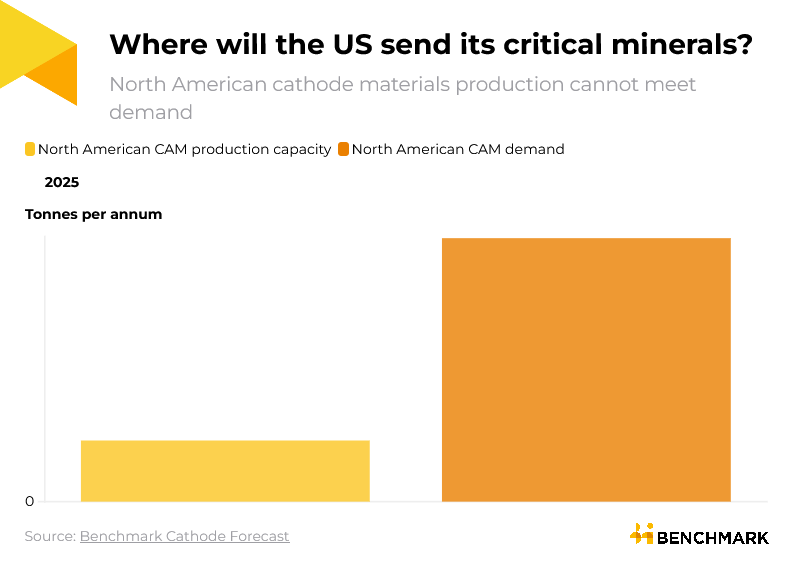
That raises the question of where the US critical minerals will all go, absent subsidies to support the companies that buy them in the electric vehicle supply chain. In particular the midstream of the battery industry: the cathode and anode material producers.
Biden’s friendshoring
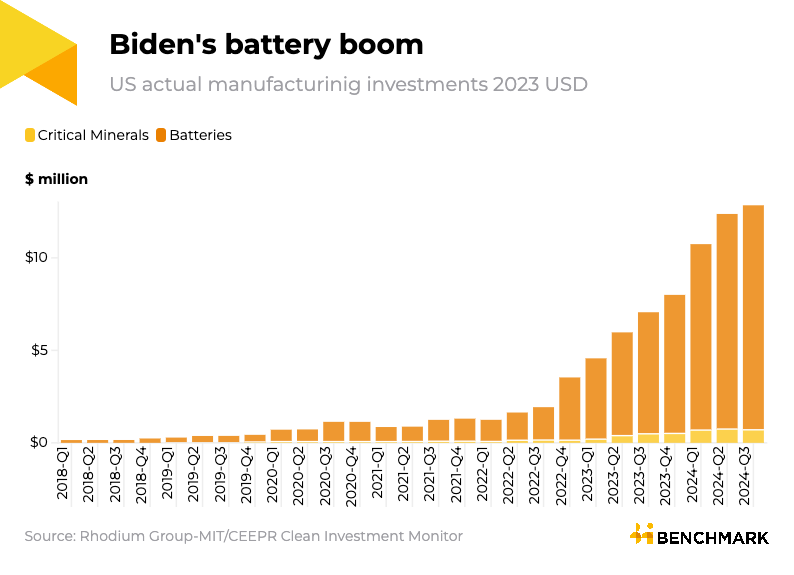
Under former President Joe Biden, the Inflation Reduction Act helped support the rapid build out of battery gigafactories in the US.
It also encouraged a supply chain for these factories to be built in “friendly countries,” which had a free trade agreement with the US.
This was crystallised in the IRA’s electric vehicle tax credits, which required battery minerals to be processed in the US or Free Trade Agreement countries – if automakers wanted to receive the full $7,500 credit for consumers.
As a result, cathode material plants were built or expanded in Canada and South Korea, in order to supply the US market.
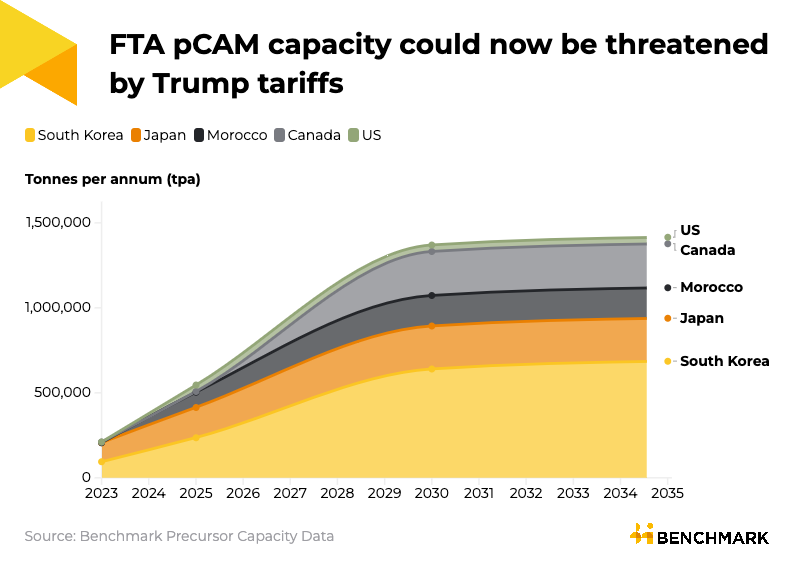
But that supply chain structure, which was built around the notion of “friendshoring,” looks less certain under Trump. He said he will put 25% tariffs on imports from Canada and also review other trade agreements. What happens to “friendshoring” in this environment?
South Korea’s pivotal role in the supply chain
Any country that runs a trade surplus with the US must be nervously watching the current situation.
South Korea is one of those countries. Its trade surplus with the US has only grown in recent years, and was a record $44.4 billion in 2023, according to Reuters.
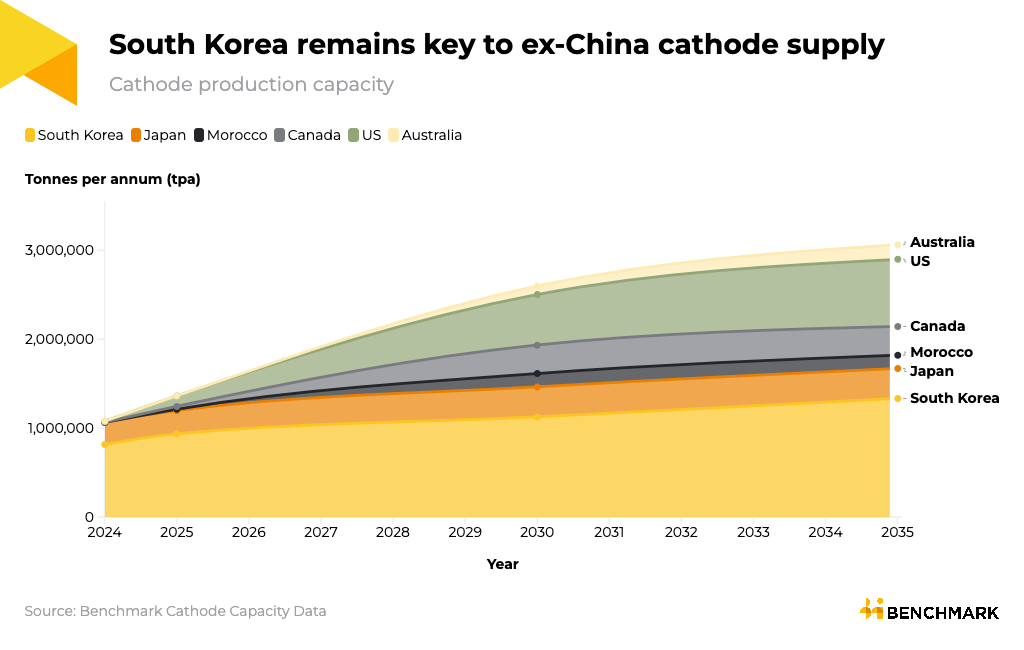
The country is the world’s second largest producer of cathode active materials for electric vehicle batteries, and a leading buyer of critical minerals for Western supply chains.
South Korea accounted for 463 ktpa of CAM capacity in 2024, according to Benchmark’s Cathode Forecast. It currently plans to add 294 ktpa of CAM supply by 2040 if all announced projects succeed, with more expected to be announced in the interim.
In a sign of Korea’s concerns, this month the country’s Ministry of Economy and Finance said it had set aside $250 billion to help its exporters. The Ministry of Trade, Industry and Energy also launched a funding package for the battery industry, including anode producers.
“We will focus on developing strategies for the automotive and battery industries aiming to address external changes, such as possible tariff increase of the new US administration and uncertainties related to the Inflation Reduction Act,” the Ministry of Economy and Finance said.
The end of friendshoring?
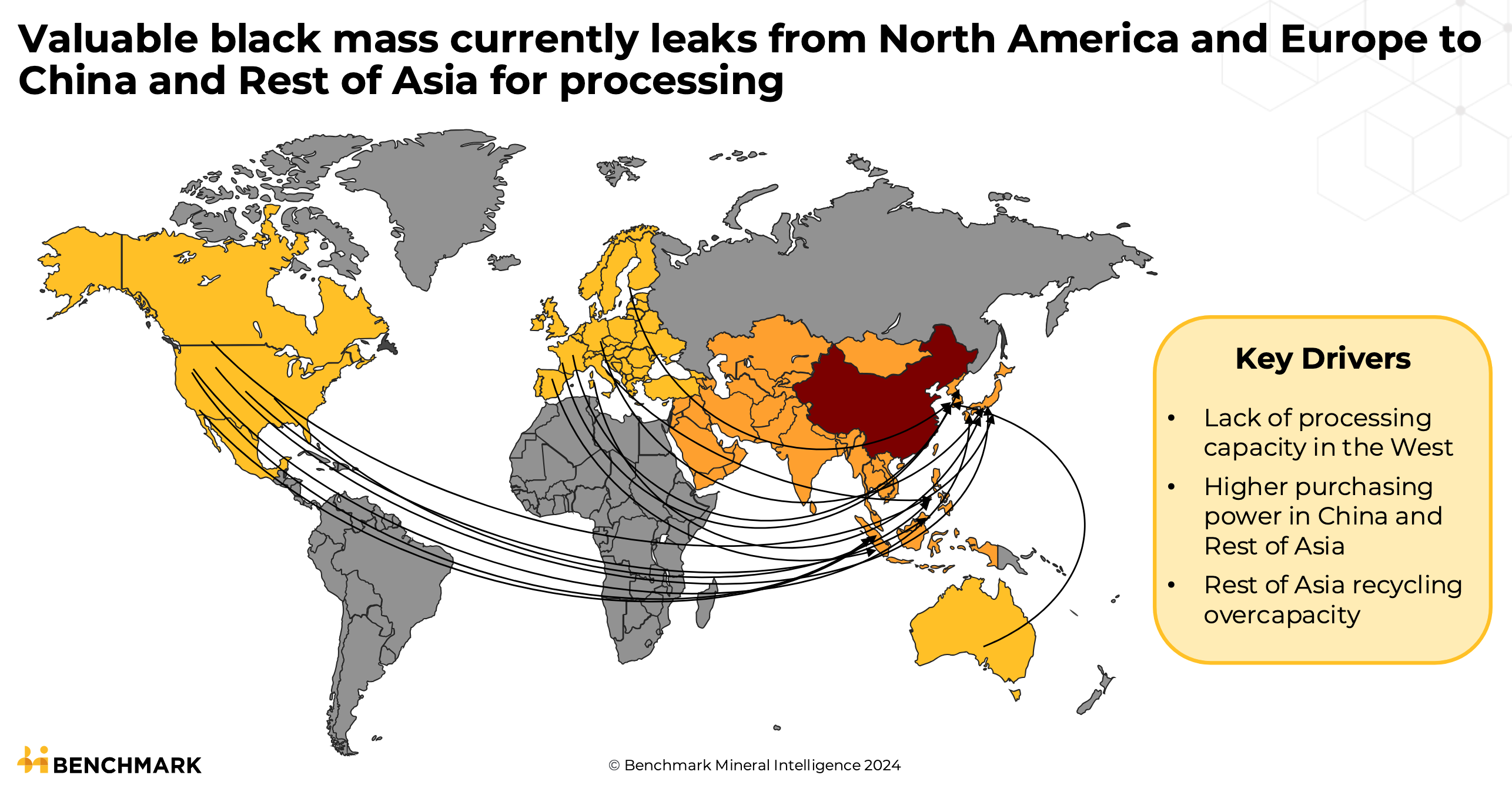
While Trump’s policies are still uncertain, his intent is not. Sending US critical minerals offshore is unlikely to please his administration.
The same is true for recycled minerals. As J.B Straubel, founder of Redwood Materials, told the Benchmark Week conference last year, without a midstream the US “could risk being a consumer and importer and then exporting our scrap, our waste, our value again, for someone else to benefit from – that would be a shame I think.”
Build in the US
Assuming US consumers continue to buy electric vehicles without the EV subsidies going forward, the answer to meeting Trump’s America-first agenda may be to reverse this trend.
Innovations will be needed to produce CAM and pCAM in the US rather than in FTA countries going forward.
This is the approach of multiple companies such as Ascend Elements, who have built the first US plant to produce pCAM in Kentucky.
In an interview with Benchmark Source, the company’s founder Eric Gratz said that the company could compete with the “landed cost” of material from China.
There will likely need to be many more projects like this to help build out the US supply chain in the years ahead.
Biden’s policies led to a battery boom in the US, while Trump’s could lead to a mining boom. The missing bit is the midstream.
For more information about the service this data draws from, get in touch
Want to read more analytical content?
Create a Free Account
Create a free Intelligence account to access 3 content pieces per month.