What’s in store for lithium prices?
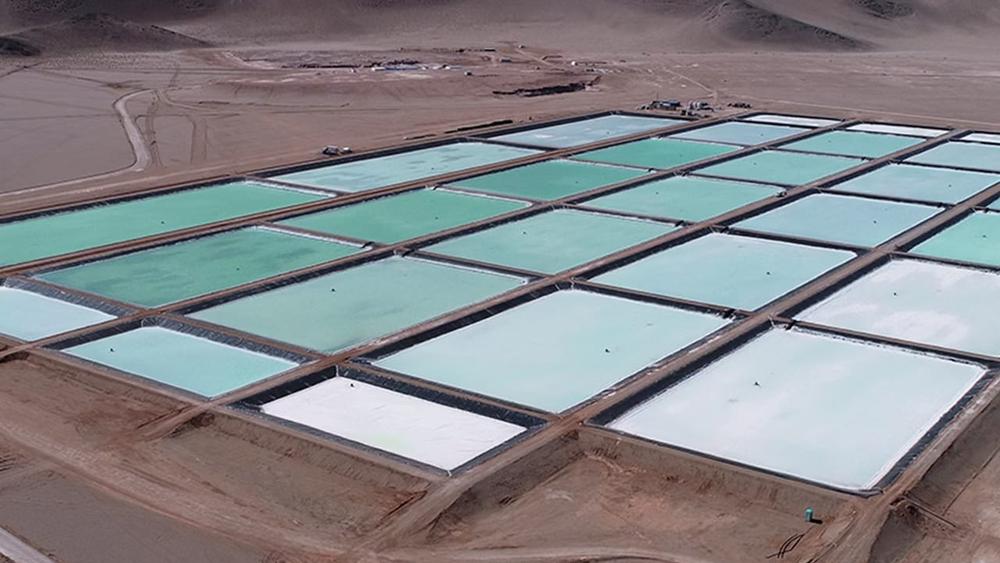
Prices for lithium chemicals in the Chinese domestic market continued to rally this month, driven by improving sentiment surrounding the electric vehicle and energy storage markets.
Battery-grade lithium carbonate in China has now risen by 13% year-to-date to trade at an average price of RMB 110,250 ($15,325) a tonne.
Yet while sentiment has turned positive, due to a rebound in battery production following the end of China’s Spring Festival and environmental inspections in Jiangxi province, it remains to be seen whether demand in the near-term will be strong enough to support a significant rise in prices, according to Benchmark.
Benchmark breaks down where the lithium market may be headed.
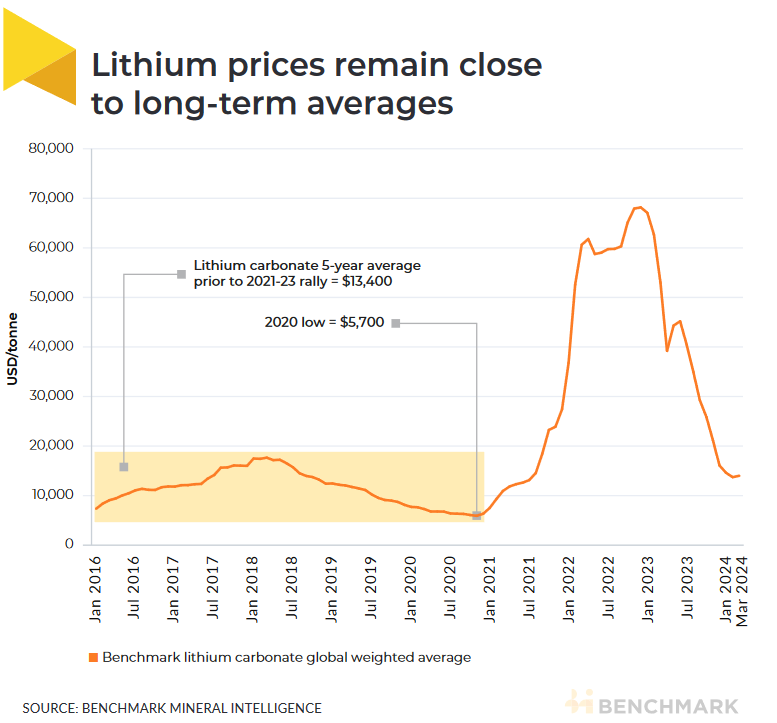
What do prices tell us about demand?
The short-term increase in lithium prices in China reflects an uptick in purchases from cathode producers. Chinese cathode producers have increased their production targets this month, and are procuring additional lithium feedstock rather than building up inventory.
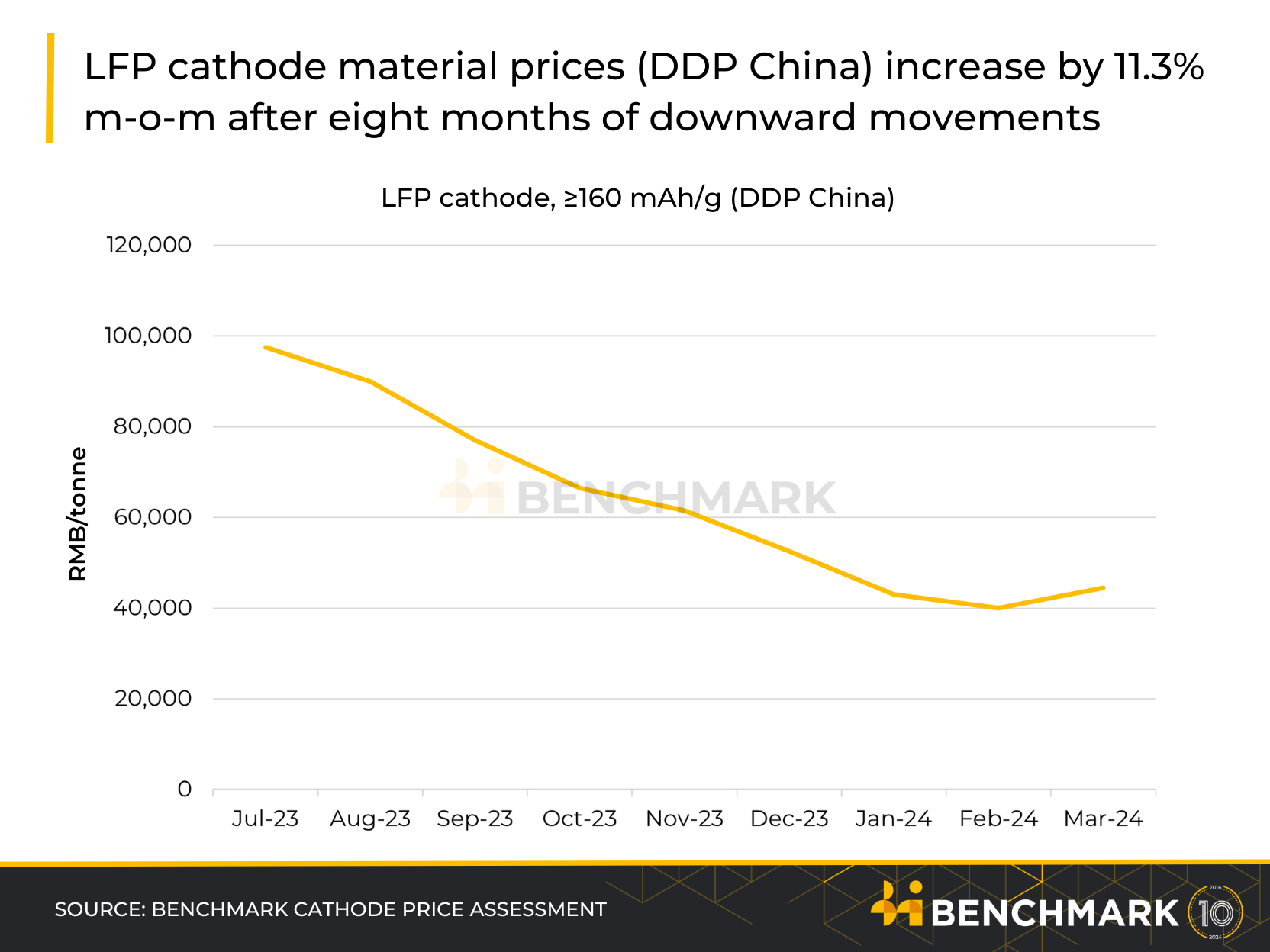
Prices for LFP cathode material increased by 11.3% to an average of RMB 44,500/tonne ($6,186) between late February and mid-March, according to Benchmark.
Still, their purchases are limited, suggesting they don’t forecast a significant increase in demand, according to Evan Hartley, a senior analyst at Benchmark.
“Cathode producers remain cautious. If they really forecast higher demand they’d stock up now while prices are cheap,” he said.
Stronger demand for high nickel NCM cathode chemistries is also pushing Chinese lithium hydroxide prices higher. Prices for lithium hydroxide ticked up by 2.6% to an average of RMB 100,000/tonne ($13,900) (EXW China) in the week to 20 March.
Prices for NCM811 cathode material rose 2% between late February and mid-March to an average of RMB 155,000/tonne ($21,545), according to Benchmark’s Cathode Price Assessment.
Still, there is a lack of support for significantly higher lithium feedstock prices. Australian miner Pilbara Minerals said last week it accepted a pre-auction price for 5,000 tonnes of spodumene concentrate at an equivalent of $1,200 a tonne (SC6.0 CIF China) to be shipped in December.
That price is in line with offers for material already reported by Benchmark earlier this month, and contacts reported that this price fell below the expectations of some market participants, with the effect of slowing rising prices.
Where do the majors see the market in 2024?
The largest lithium majors, including Arcadium Lithium, Albemarle and SQM, view current lithium prices as too low to support expansion projects, warning of the need for higher prices to meet electric vehicle demand growth.
In its fourth quarter earnings last month Albemarle said it had pushed back its target date for a lithium hydroxide refinery in the US, and it would not start construction of its King Mountain mine in North Carolina.
“At today’s prices, the economics for new greenfield projects, particularly in the West, are not supported,” it said.
Arcadium Lithium also said it would look at options for its two spodumene mining resources in Canada, and likely only produce feed for its own refinery in the country, rather than selling material overseas.
Lithium CEOs on the state of the market
How will the market balance develop?
Overall, Benchmark expects lithium demand to increase by 32% this year, compared to 2023.
But increases in production by industry majors as well as new supply means the market is set to be in a small surplus of around 8,000 tonnes this year, Benchmark forecasts.
Arcadium Lithium said it would increase lithium carbonate and lithium hydroxide volumes by around 40% in 2024 to between 50,000 to 54,000 tonnes LCE.
Outside of China, so far the largest market casualty of lower prices has been non-integrated spodumene production such as Australia’s Core Lithium, which said in January it would suspend mining operations at its Finniss lithium project in the Northern Territory and process stockpiles instead.
Its estimated output was set to be 11,000 tonnes LCE this year.
“Even though some more supply curtailments might occur, as some miners are struggling, as of now we don’t have enough evidence of this happening,” Federico Gay, an analyst at Benchmark, said.
Benchmark currently forecasts the lithium market will be balanced until 2029, when it will enter a deficit.
What about demand?
Lower lithium prices could help push demand higher, however, if it leads to lower battery prices.
Prices for lithium iron phosphate (LFP) battery cells have fallen by 20% over the past year to an average of $73.6 a kilowatt hour, according to Benchmark’s Lithium Ion Battery Cell Price Assessment.
China’s largest EV producer BYD has already started to cut prices for more models this year, a trend that is being followed by others across the industry.
China’s largest battery producer CATL said last month that the new energy industry “maintains a rapid growth rate.”
Tier 1 battery producers are also increasing production this month, according to Benchmark’s Hartley.
“If the low prices continue it will be hard to meet the demand for lithium as we forecast there will be a deficit late in the decade,” according to Sophia Jang, an analyst at Benchmark. “A persistent low price environment could challenge this supply and tip the market towards a deficit sooner.”
Benchmark’s Lithium Price Assessments, Forecasts and ESG report provide a comprehensive view across the lithium industry as part of our leading prices, data and market intelligence for the lithium ion battery to EV supply chain.To learn more, please provide your details here and our experts will contact you shortly:
For more information about the service this data draws from, get in touch
Want to read more analytical content?
Create a Free Account
Create a free Intelligence account to access 3 content pieces per month.