Growing silicon-based anode market share to 2035 to reflect nickel-based cell growth
:format(auto):focal(center))
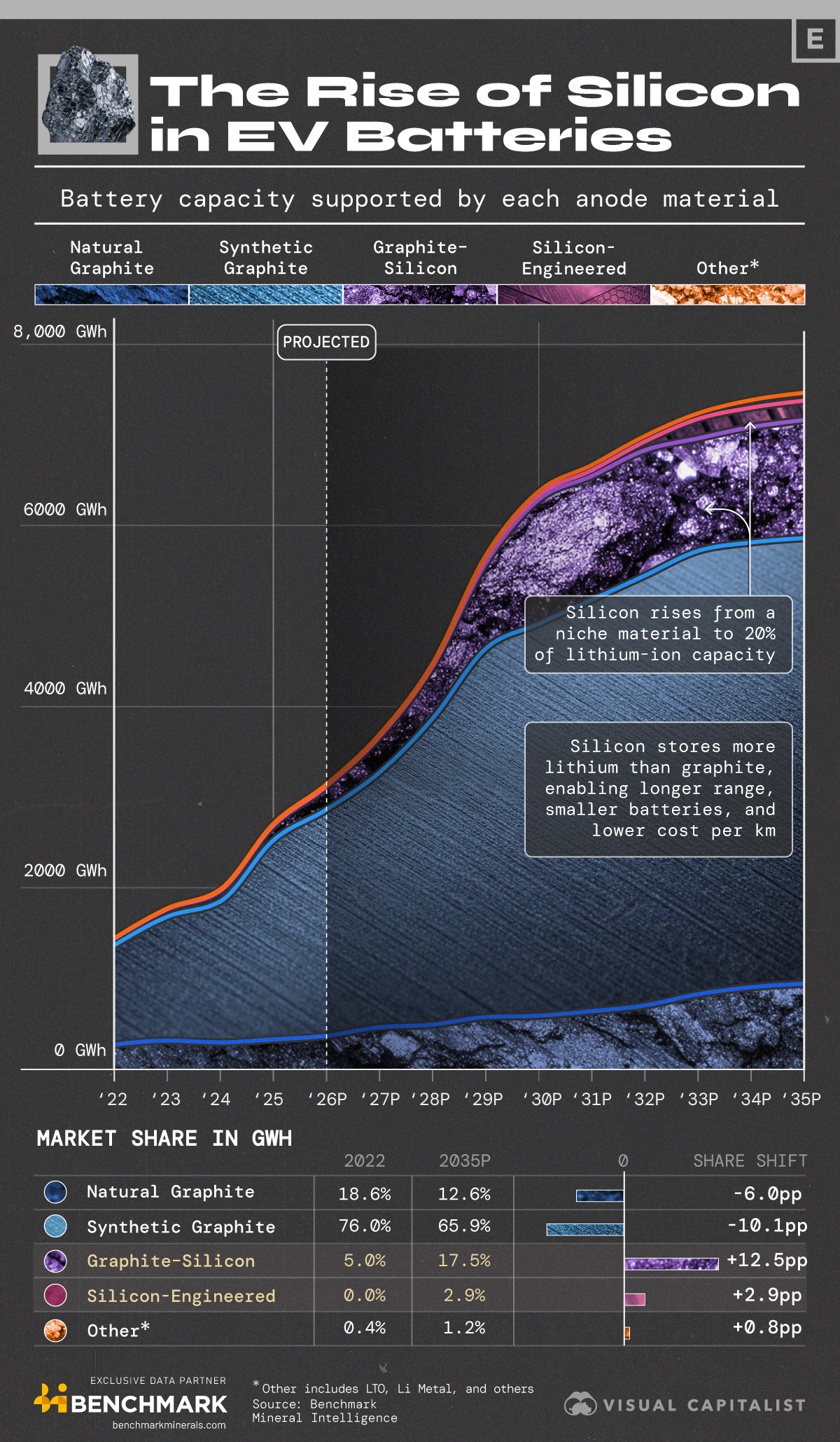
The share of anode supply that includes silicon is expected to grow to over four times its 2022 level by 2035, according to the Benchmark Anode Service. By then, anode active materials containing silicon are forecast to account for 20% of AAM supply on a GWh basis.
What are silicon-based anodes?
Traditional anodes are made from graphite, which is limited by the requirement for six carbon atoms per lithium ion. Silicon, by contrast, can store over four lithium ions per atom allowing for higher energy density as well as potentially faster charging times.
However, as silicon expands up to 300% upon lithiation, this can damage the anode structure. As such, anode producers can blend small quantities of silicon into graphite to give some of the performance gains. These so-called graphite-silicon anodes contain up to 10% silicon by weight and are forecast to account for 12.5% of anode supply on a GWh basis by 2035. Several automakers already use anode materials with small quantities of silicon blended in.
To surpass 10%wt requires greater chemical design. These are silicon-engineered materials and the most advanced can reach 100% silicon content. Such engineered materials are forecast to account for 2.9% of anode supply by 2035, and will require significant technological and processing challenges to be overcome before reaching widespread commercialisation.
 LFP dominance limits demand potential
Silicon-graphite blended active anode material (AAM) is expected to remain in market surplus through to 2038, however, as it is paired with high-nickel cathodes. Given the dominance of lithium iron phosphate (LFP) chemistry in the world’s largest EV battery market, China, this limits potential demand growth. Benchmark anticipates demand will grow faster from 2030 as ex-China, nickel-focused cell production accelerates.
Supply of silicon-graphite blended AAM is dominated by China, which is expected to continue leading supply in the years to 2030 as it ramps up production at existing assets.
To learn more about Benchmark’s Graphite & Anode Service, submit your details below and our team will be in touch:
For more information about the service this data draws from, get in touch
Want to read more analytical content?
Create a Free Account
Create a free Intelligence account to access 3 content pieces per month.