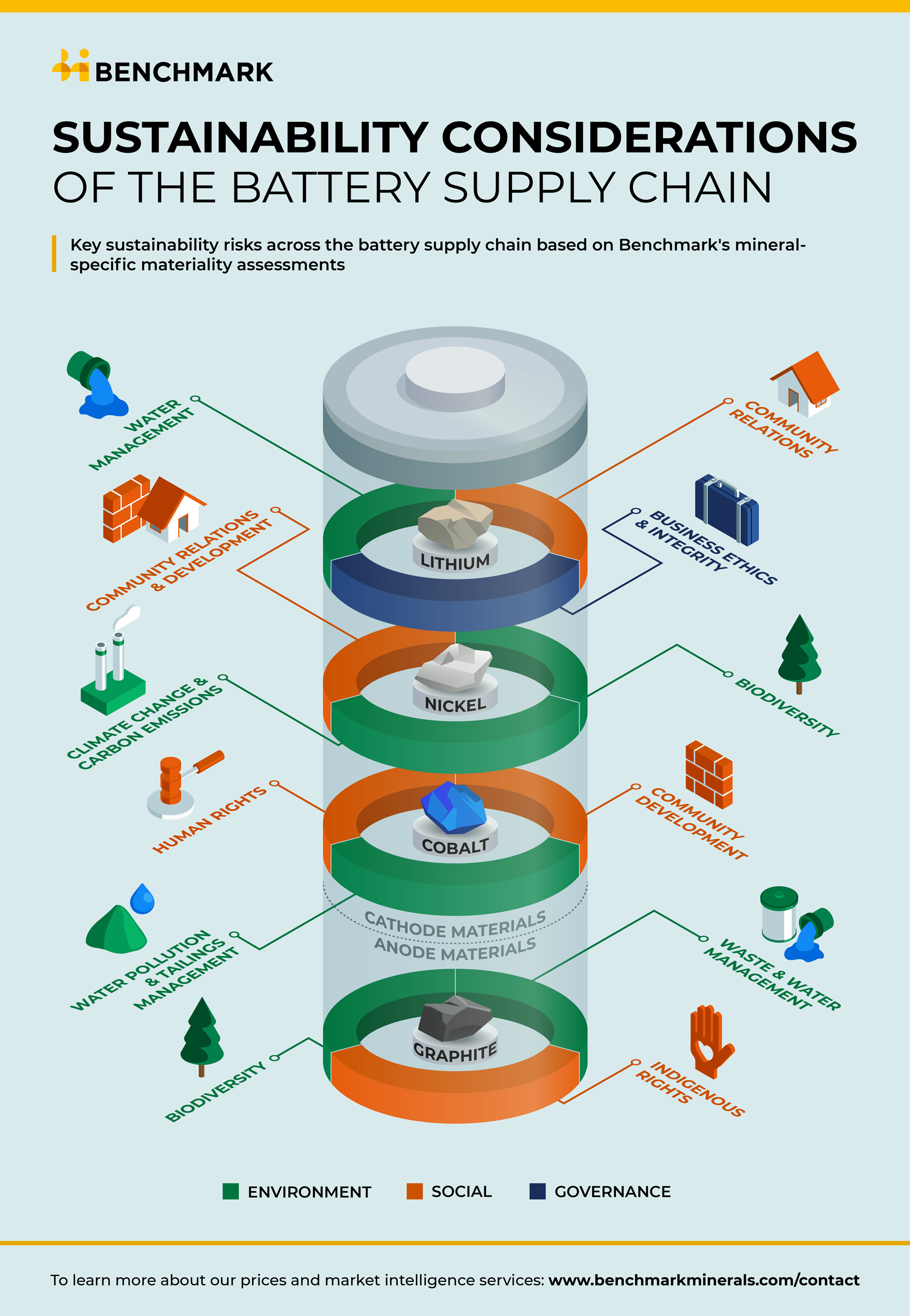
Infographic: Key sustainability considerations for battery critical minerals
:format(auto):focal(center))
Sustainability is an increasingly key consideration for companies sourcing critical minerals for the battery supply chain. However, although carbon intensity is an important metric within sustainability, it is far from the only one.
Indeed, each critical mineral has its own set of nuances and challenges meaning that the most material metric for one mineral may not be the same as for another mineral.
For example, water management is one of the top sustainability considerations within the lithium industry whereas biodiversity is a more important consideration within the nickel industry. There are also regional variations within each mineral too, with human rights issues in cobalt mining being especially relevant in the Democratic Republic of Congo.
“Simply aiming for low carbon materials to ensure responsible sourcing is not enough,” said Marine Hautsch, a sustainability analyst at Benchmark.
Using the materiality assessments in Benchmark’s Sustainability Reports, the infographic below outlines the key considerations for each mineral:
Is sustainability becoming more important?
Sustainability is on the policy agenda of an increasing number of governments and organisations.
“Downstream players are also stepping up, focusing on traceability and low-carbon mineral production to align with compliance and market expectations,” Hautsch said.
How does Benchmark assess materiality?
Learn more about Benchmark’s Sustainability services, including material-specific Sustainability Reports and bespoke Life Cycle Assessments, by filling out the form below:
For more information about the service this data draws from, get in touch
Want to read more analytical content?
Create a Free Account
Create a free Intelligence account to access 3 content pieces per month.