OPINION: Is Direct Lithium Extraction the industry’s ‘shale’ moment?
:format(auto):focal(center))
More than twenty years ago, the oil industry was fixated with fears of peak oil supply – a widely misplaced view that geological constraints would determine production in a bell-curve fashion. Oil supply would become less elastic as a result, so the argument went.
The US shale revolution – which began in 2008 – busted this myth. Having introduced a new source of highly elastic short-cycle supply, unconventional shale transformed the US as the world’s largest oil and gas producer. As a result, today no-one seriously talks of peak oil supply. Instead, peak demand has become the new buzzword.
For the global lithium industry, a different debate is taking root: while oil demand may only grow by ~1% per year to 2030, lithium demand is expected to grow by CAGR 15-20% to 2030.
Despite a recent softening in lithium prices from last year’s record highs, the marginal cost of producing lithium continues to remain high – driven by degrading ore qualities and upstream cost inflation.
Conventional wisdom today holds that lithium’s relative supply inelasticity should maintain pricing above incentive levels. However, just like fears of peak oil supply, technology can be a game-changer, shifting the entire supply curve. Can Direct lithium extraction (DLE) – touted as a new ‘game-changing’ technology – promise to give lithium its ‘shale’ moment?
DLE’s promise
Widely touted as a ‘game-changing’ technology, DLE aims to remove lithium in solution via ionic size, charge, and chemical properties, while stripping impurities, mainly magnesium, calcium, potassium, and sodium. Multiple approaches are under development, with sorption, ion exchange resins, and solvent extraction leading the charge towards commercial scale.
These processes promise significantly greater lithium recoveries resulting in reduced surface footprints, limited water consumption, and optimised carbon intensity. The projects can use geothermal brine renewable energy or co-located carbon capture, as explored by developer E3 Lithium.
Pressures to evolve lithium extraction technology are arriving from across the entire value chain, most evident from Chile’s recently announced National Lithium Strategy, which says that all new projects should use DLE, to minimise the environmental impact across Salar brines.
Additionally, as Chinese industry counterparts dominate the conversion of hard-rock sources into lithium chemicals, controlling around 98% global refining capacity in 2023, the potential of DLE could also unlock vast ‘unconventional’ brine resources across Western jurisdictions.
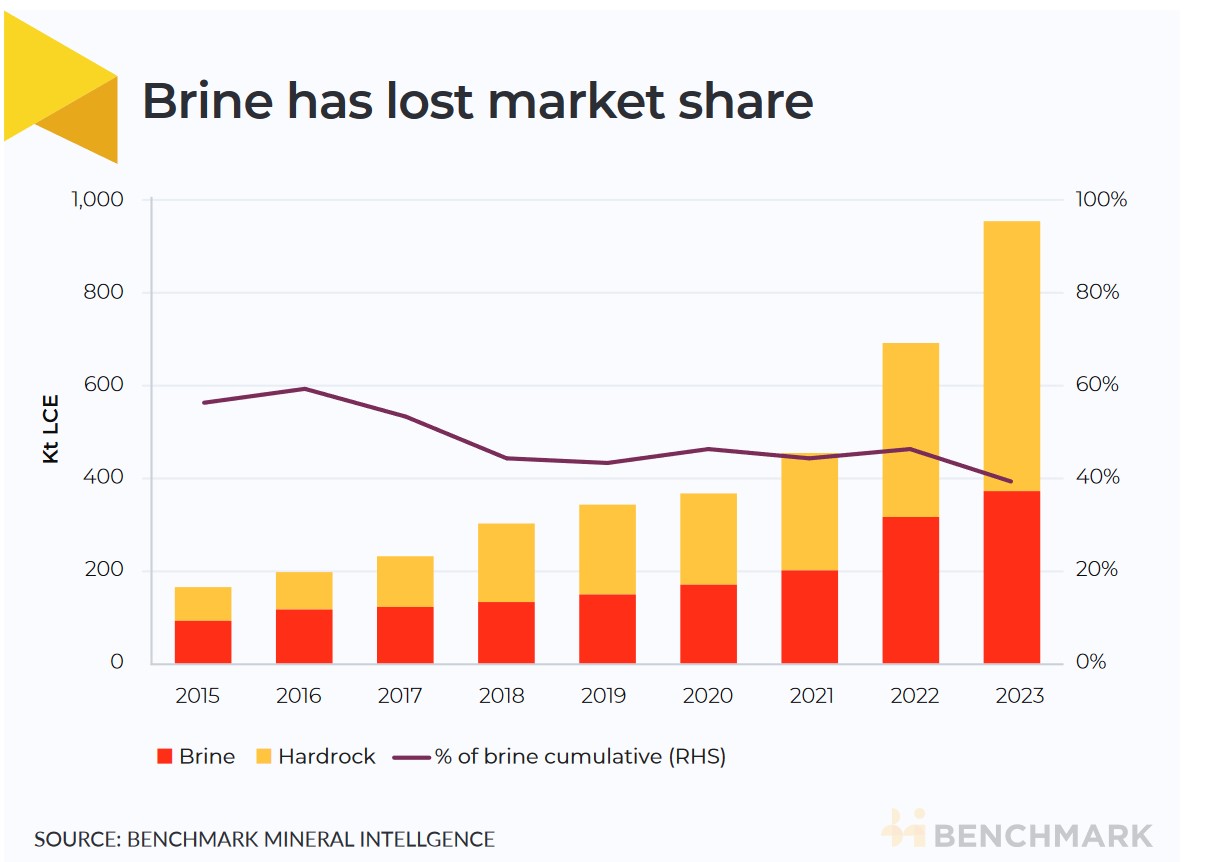
Currently, there are three key brine resources where optimised DLE flowsheets are being explored, key among them being: conventional salar brines, geothermal brines, and oilfield brines.
But compared to the traditional salar brines across South America and China, geothermal and oilfield brines contain lithium in solution an order of magnitude lower than existing supply; typically 100-200 ppm lithium compared up to 2000ppm. Therefore, the economic viability of DLE on low-grade brines requires significant demonstration as projects push towards first commercial production.
Oil and gas industry enters lithium
The allocation of capital and resources by the oil and gas industry is growing in low-grade brines, with actors including Chevron, Equinor, and Schlumberger (developing the NeoLith project in collaboration with Panasonic) all developing interest.
They have followed a path led by developers such as Standard Lithium and speciality chemical maker Lanxess in Arkansas.
And the brine resources are huge.
Standard Lithium alone has 3.14m tonnes of LCE (NI-43-101) indicated brine resource.
In particular, ExxonMobil are pursuing a diversified approach to lithium extraction, purchasing 120,000 gross acres across the Smackover formation in South Arkansas, potentially containing up to 4 million tonnes LCE, equivalent to 50 million EVs.
An earlier $6.4m investment in June 2022 from Imperial Oil – an Exxon subsidiary – secured strategic exposure to Alberta-based E3 Lithium’s Clearwater oilfield brine project, which is advancing towards a pilot plant during summer 2023.
The scale of sunk cost into borehole infrastructure and historic production data, production knowledge, and availability of co-located industry such as fresh water and reagents, offers a major market advantage for this segment of the lithium industry.
Commercial hurdles
Despite the rosy outlook for expanding DLE, significant commercial hurdles need to be overcome, however.
1. Cost curve position – Across conventional salar brines, the true capital intensity linked with supporting infrastructure e.g., fresh water and reagents, requires greater visibility, while low lithium concentrations and energy costs across Western jurisdictions also require greater scrutiny.
2. Time to market – In June Australia’s Lake Resources announced a three-year delay to the development of its Kachi project in Argentina, which is facing soaring inflation, supply chain delays and a lack of skilled labour. Delays are currently around 2.4 years for new conventional lithium projects, according to Benchmark, so compounding greenfield sites with technology risk will only exacerbate the time to market.
3. ESG credentials – While DLE is touted as the saviour to freshwater disruption across conventional salar brines, the volumes required for the washing and stripping phase of sorbent technologies remains high. Our site visits to DLE players suggests up to 100-200 tonnes fresh water per tonne of lithium carbonate product for sorbent materials. The potential for efficient recycling of freshwater streams is high, but with an impact on the total operating expenditures.
No silver bullet
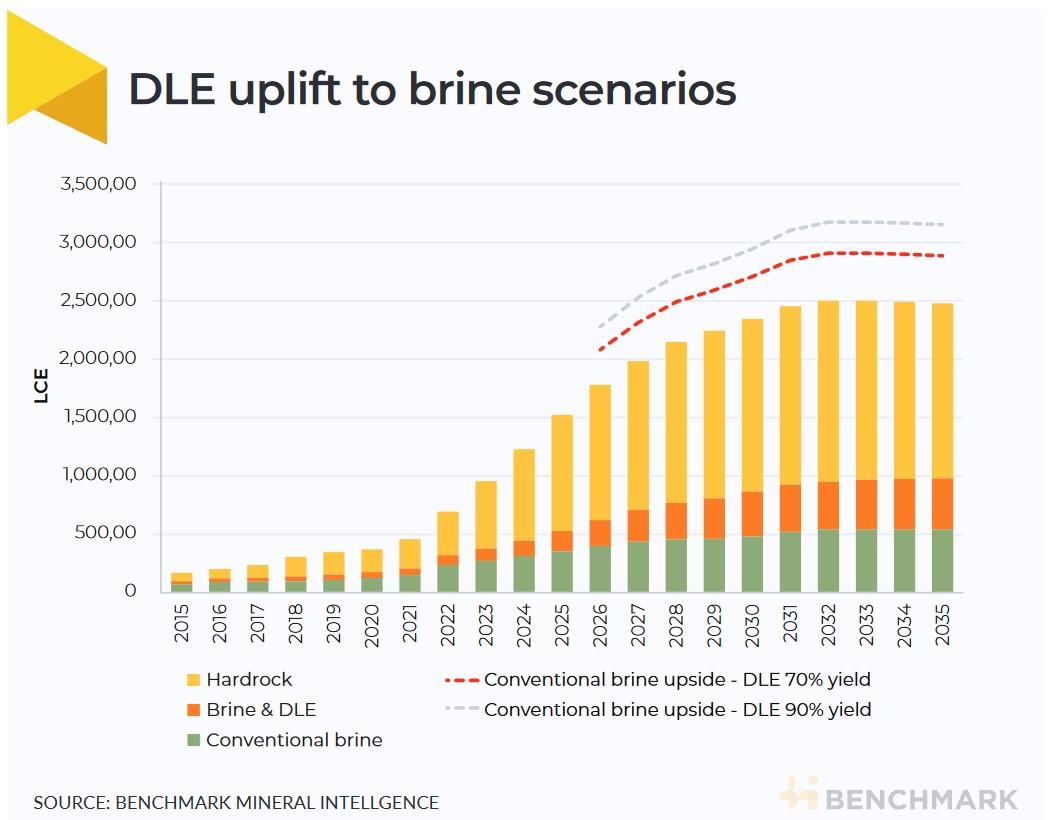
While DLE may not be the silver bullet for the lithium industry in the short-term, the optimisation of new flowsheets for various brine resources does highlight a reality for supply over the next decade: the growing importance of unconventional supply and the expanding ecosystem of new players in the lithium value chain – particularly oil companies who will bring capital and expertise to the industry.
For now, however, the industry – much like Godot in Samuel Beckett’s play – will have to wait for its ‘shale’ moment.
Ahmed Mehdi is a principal at Benchmark Minerals, leading the company’s engagement with the global energy industry.
James Mills is a principal at Benchmark, having previously worked with Volkwagen AG and is a leading lithium strategist at the firm.
To speak to our lithium experts and learn more about Benchmark’s Lithium Forecast, advisory services and market-leading prices coverage, please provide your details here and our team will be in touch:
For more information about the service this data draws from, get in touch
Want to read more analytical content?
Create a Free Account
Create a free Intelligence account to access 3 content pieces per month.