View from the ground in Argentina: A defining moment for DLE
Argentina has long been central to the global lithium industry, including the pioneering of direct lithium extraction (DLE) by FMC at Fenix some 29 years ago. China’s Qinghai is home to several commercially operating DLE projects, most are based on the technology used at Fenix.
Many new projects are now looking to use DLE, but up until now, none have progressed to commercialiasation.
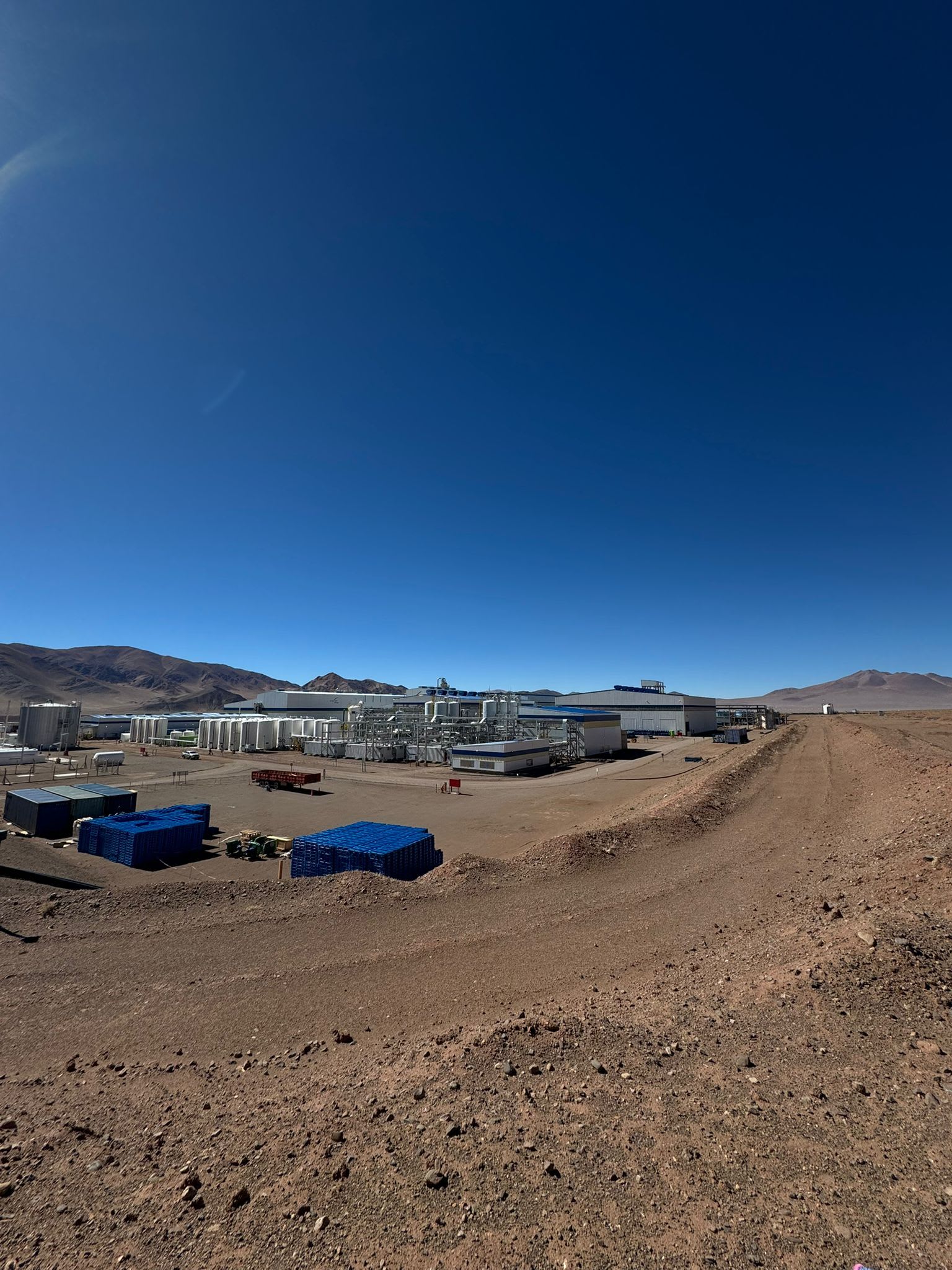
A recent visit by Benchmark’s Lithium Product Director, Cameron Perks, suggests that this is about to change with Eramet’s Centenario project now at ~70% of capacity and already partially producing battery grade material.

Benchmark’s Lithium Product Director, Cameron Perks
With a final push, Centario will become the first pure-play DLE project utilising a new generation of DLE technology to come online, and characterises a meaningful inflection point for the lithium industry’s assessment of DLE risk, scalability, and cost competitiveness.
Meanwhile, Rio Tinto will flex its balance sheet, operational experience at nearby Rincon to become the next DLE project to come online after Eramet.
Industrial DLE is not new, but this is different
Argentina is not experimenting with DLE for the first time. Fénix has been producing lithium via DLE-related processes for nearly 30 years, offering a long-standing proof point that DLE can operate profitably in Argentina’s remote Hombre Muerto salar.
What distinguishes the current moment is the emergence of new-build facilities designed end-to-end around DLE, in completely different salars, by new-comers to the industry.
Eramet’s advanced Centenario project is purpose-built with DLE as the core process, supported by a fully integrated downstream flowsheet incorporating membrane concentration, mechanical vapour recompression (MVR), and impurity removal. At the time of Benchmark’s visit, the facility was operating at approximately 70% of nameplate capacity, with ramp-up progressing toward stable commercial production.

MRV unit at Eramet’s Centenario project
Benchmark also visited Rio Tinto’s lithium assets in Argentina, including both the long-established Fénix operation and the newer Rincón project.
Fénix remains a mature, de-risked operation, with stable wells, consistent flowsheets, and decades of reservoir performance data. Its longevity continues to demonstrate that DLE can support long mine lives when geology, chemistry, and operating discipline are aligned.
Rincón, by contrast, remains in a pilot-scale phase. While Rio Tinto has clear ambitions for the asset, the project has not yet reached industrial maturity. DLE media selection is still pending, and demonstration plant challenges were observed, highlighting the execution and integration challenges involved in scaling DLE from pilot to industrial operation.
Eramet: DLE as a core business, not an experiment
For Eramet, DLE is not peripheral to the company’s future facing strategy, it is central to it.
The project reflects nearly a decade of end-to-end testing, flowsheet optimisation, and in-house sorbent development.
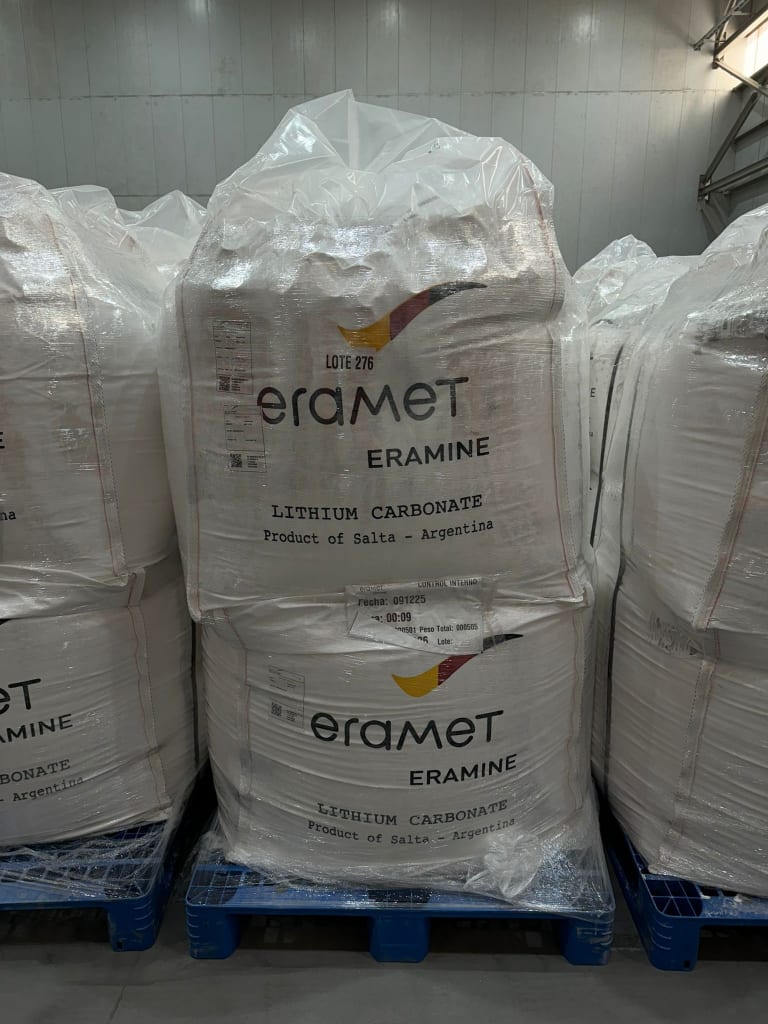
Redundancy is embedded throughout the plant design, supporting operational continuity during ramp-up. Early battery-grade production has already been achieved, even before final polishing stages are fully optimised; a strong signal of underlying flowsheet robustness.
While challenges remain, particularly around reagent supply and energy costs, Centenario’s progress materially lowers perceived execution risk for future pure-play DLE developments.
Cost drivers and technical convergence
Across both operators, several consistent technical themes emerged:
These insights are increasingly convergent across operators, suggesting that DLE cost structures are becoming better understood — even if project-specific outcomes will continue to vary.
Policy reset supports long-term capital, cautiously
Meetings with macroeconomic and policy stakeholders in Buenos Aires highlighted a concerted effort to stabilise Argentina’s economy and re-establish credibility with international capital.
The introduction of the RIGI framework is emerging as a practical enabler of project development, particularly for mining, by providing regulatory certainty across both national and provincial jurisdictions. While structural risks remain, there is broad political alignment behind export-led growth in mining and energy, and a clear recognition of the sector’s importance to future foreign exchange generation.
For lithium developers, this backdrop modestly improves the probability of project advancement, particularly for assets able to demonstrate technical readiness and capital discipline.
What this means for the industry
The successful ramp-up of Eramet’s Centenario project changes the nature of the global DLE conversation. The question is no longer whether DLE can work at scale, but where it works best, at what cost, and with which trade-offs.
As a result, Benchmark expects 2026 to be a high-activity year for DLE-related evaluation, including increased developer inquiries, investor due diligence, and reassessment of brine assets previously considered marginal under evaporation-based models.
With first-hand exposure to both legacy and new-build DLE operations, Benchmark is well positioned to support this next phase through independent cost analysis, supply forecasting, and strategic advisory work grounded in observed plant performance rather than theory.
For more information about the service this data draws from, get in touch
Want to read more analytical content?
Create a Free Account
Create a free Intelligence account to access 3 content pieces per month.