The Great EV Recalibration
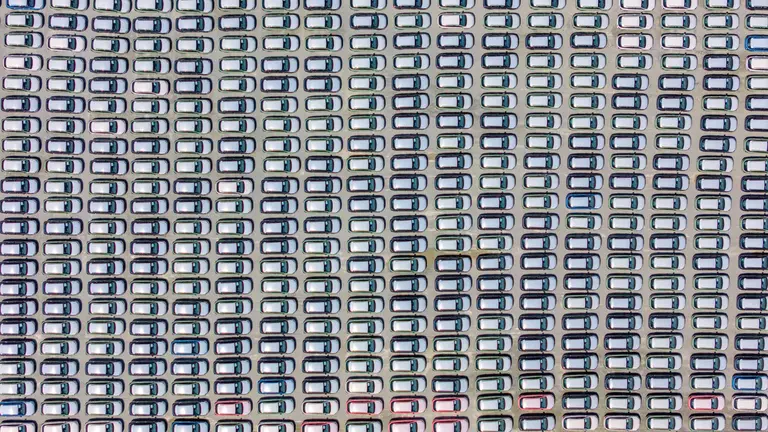
The 2027 Chevrolet Bolt is the cheapest new electric car on sale in America, and one of only a handful under $35,000. Whether it can reverse America's EV downturn is another matter.
It starts under $30,000, long seen as the price point for mass adoption, and gets there on lithium iron phosphate (LFP) cells from CATL. It sums up the state of the EV transition: the West can build the car, but China still builds what makes it affordable.
The capital that poured into western supply chains after the Inflation Reduction Act has not loosened China's grip. China made 79% of the world's lithium-ion cells the year the act passed; last year it made 83%. Meanwhile, battery demand outside China has more than doubled, from 331 GWh to 958 GWh.
International trade deals would once have bridged the gap between low-cost supply, and developed nation demand. But in today's fractured geopolitics, simply buying from the cheapest – and most abundant – producer isn't an option, particularly as China moves from upstream supplier to direct automotive competitor.
This is the heart of the great EV recalibration: how western carmakers deal with China now that it is competing (and arguably dominating) at both ends of the supply chain. The tailwinds behind their supply chain spending in 2021–24 have gone, but the economic case for controlling part of their value chain remains.
The speed and scale of China's EV ramp-up has been extraordinary. In five years, its EV output has grown elevenfold, from 1.4 million in 2020 to 15.1 million last year, launching more than 115 new models alone this year, vs 64 from non-Chinese producers.
And where markets open the door to Chinese cars, EVs sell. Last year four in five EVs sold in Latin America, the Middle East, Oceania and Africa were built in China.
By contrast, Europe has felt (and subsequently begun trying to legislate against) the effects of low-priced Chinese alternatives, which have started to threaten the future of its legacy automakers.
Despite its once aggressive targets for electrification, the region has struggled to build a battery base sufficient to support the evolution of its car industry. Northvolt went bankrupt, Freyr abandoned Norway, and the plants on the continent that do work rely on Asian giants CATL and LGES.
Those facilities have kept EVs cheaper, but at the cost of regional control. One in five EVs sold in Europe last year was built in China, and more than two in five run on cells from Chinese makers.
Western carmakers have learned the hard way that you cannot price your way into this market without owning more of the chain behind it.
Yet the West is stepping back. Stellantis, Ford, GM and Volkswagen wrote down more than $50bn on EV plans, and three walked away from battery joint ventures. Stellantis sold its stake in a Canadian battery venture to LG Energy Solution for $100 – less than a set of winter tyres.
Every retreat widens the gap. Last year China made 92% of the world's battery anode material and 88% of its cathode material. A high-nickel NCM811 cell costs about $75 per kWh in China, against $82 in North America and $89 in Europe according to Benchmark’s October battery price assessment. Whether Chinese costs are artificially low is a fair question. For a carmaker choosing a supplier this quarter, it is academic.
GM took a $6bn charge but kept investing in the cell itself. Its lithium manganese-rich cells, due in 2028, promise a third more energy density than LFP at similar cost. That is the right kind of bet: technology built for the supply chain in front of you, instead of a race to catch up with established technologies.
For governments, an "own everything" approach takes too long and costs too much. They should instead support the parts of the chain where domestic or allied suppliers can credibly scale and give carmakers a real second source. Where the technical, financial or, frankly, time barriers are too great, licensing or joint production may be the only road to bringing manufacturing home and building local skills, as Tesla did with Panasonic in Nevada.
The West can move some steps of the chain away from the incumbents, but it is unlikely to make every battery it needs. Chasing every link of a chain this broad and complex would arguably spread its capital so thin that those already in control stay in control.
China has spent a decade building much of the supply chain the West now wants. The uncomfortable reality is that working with that supply base may be the fastest way to displace it in the future; Ford is already doing it with CATL in Michigan.
That won't fly politically everywhere, but the West holds a card too. China wants the big car markets it has yet to crack, and the West needs the supply chain China already controls. The question is not whether to compete or cooperate, but on what terms. Whichever side sets those terms first will decide who wins the next stage of the EV race.
Subscribe to Andy Miller's Resources to Reslience Newsletter on LinkedIn here.
For more information about the service this data draws from, get in touch
Want to read more analytical content?
Create a Free Account
Create a free Intelligence account to access 3 content pieces per month.